France and the Colonial Postcard
What Were Colonial Postcards Used for?
Postcards have a history of being used in a colonial manner, generally as advertisements for the colonies or as destination postcards, showing off foreign and ‘exotic’ lands. Some emphasize the beauty of the land, while others talk about the uniqueness of the indigenous cultures. In all cases, intentionally or not, these postcards played a role in justifying colonization.
The Postcard—What Can We See?
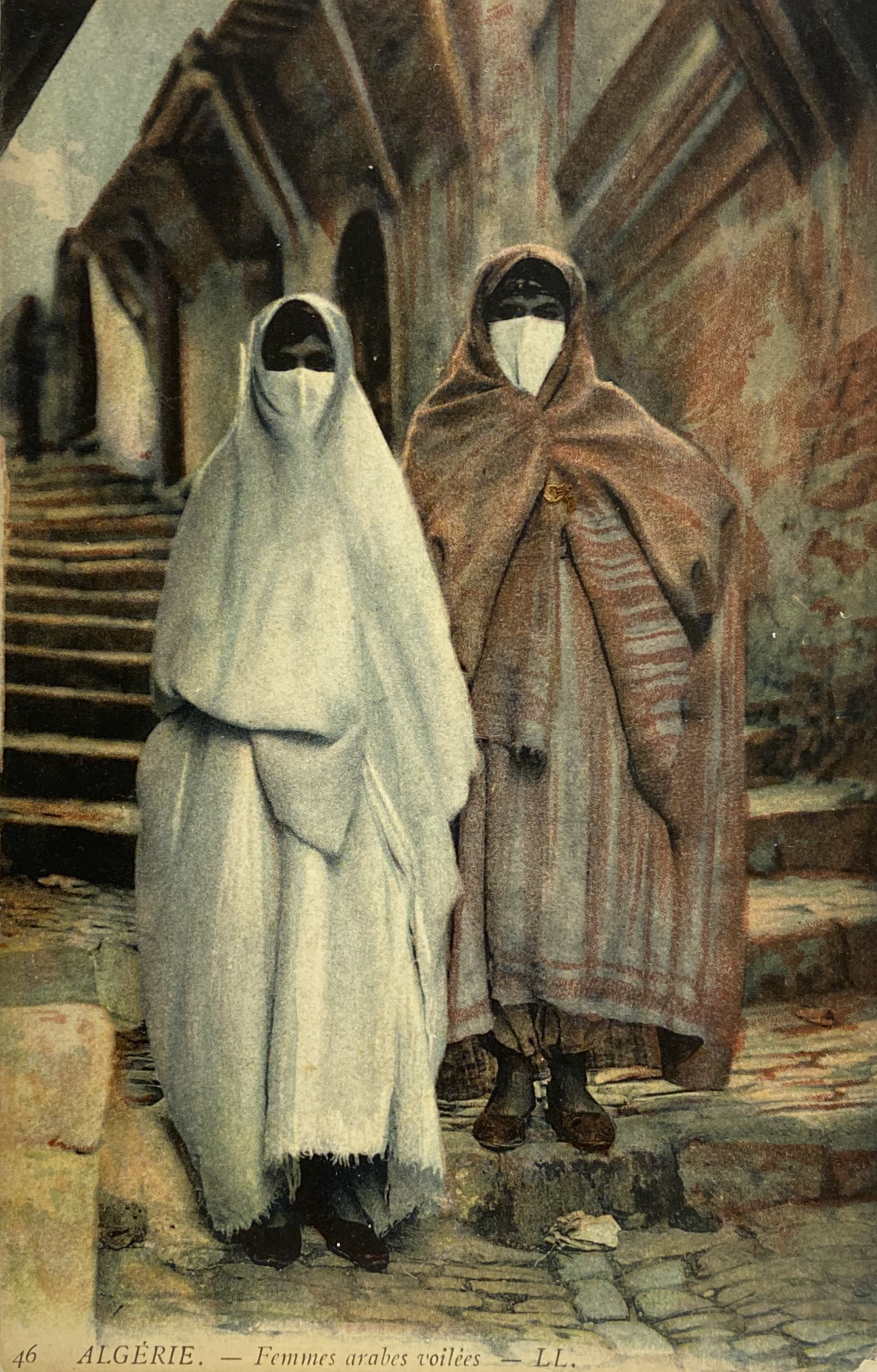
The caption on this postcard, which dates from the early 1900s, reads “Algerie — Femme arabes voilée, LL.” The English translation is “Algeria — Veiled Arab Women, LL.” The postcard is hand-painted.
Quick Facts on Colonial Algeria:
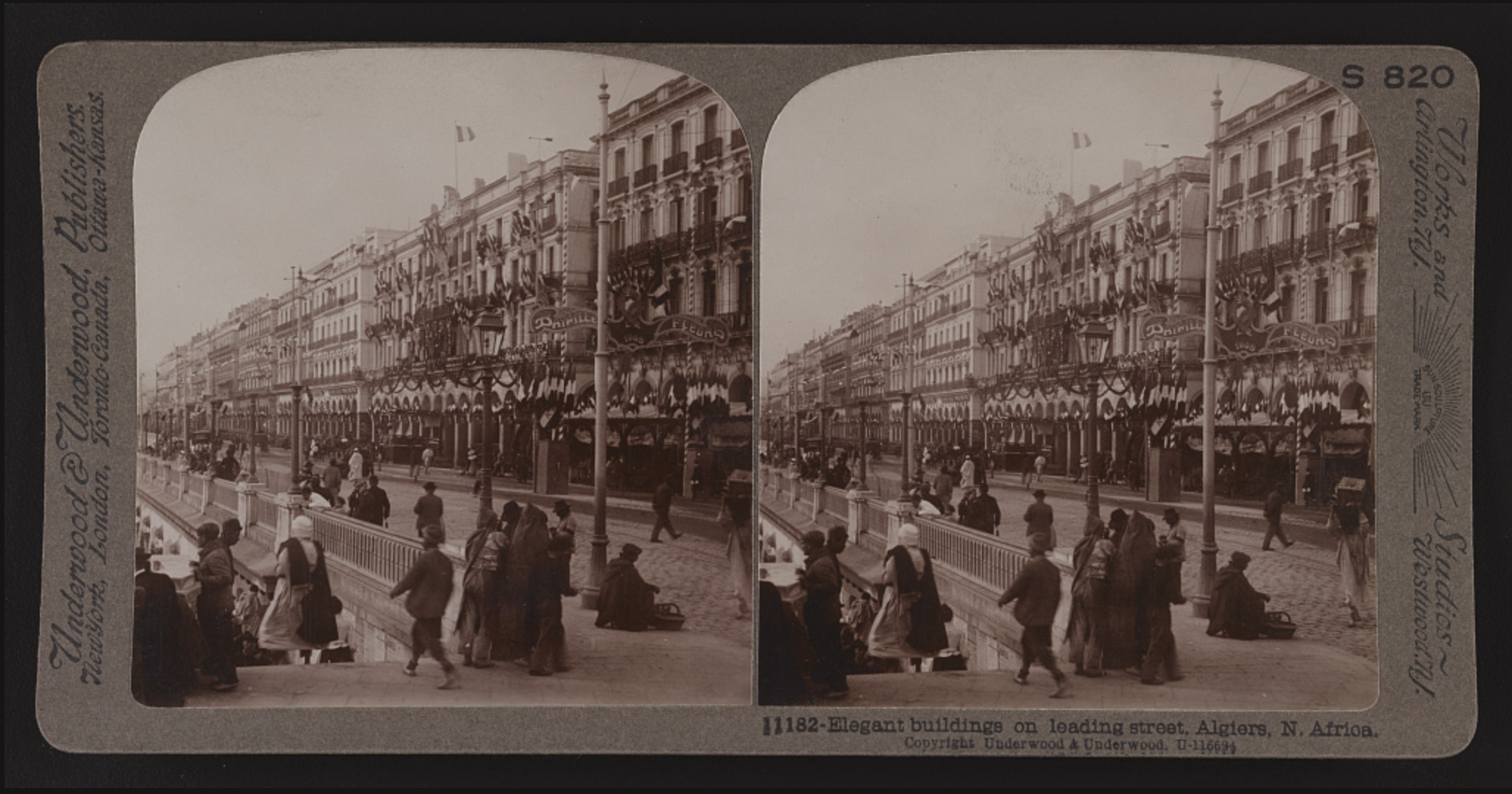
- France officially established control over Algeria between 1830 and 1847, through fighting that lasted in some areas until the 1870s.
- From 1847 to 1870, Algeria was ruled by a French military government, after which point the colony transitioned to a civilian government.
- Algeria was a settler-colony—white French nationals were encouraged to move to Algeria and displace the native populations from desirable land.
- Indigenous populations under French control were considered to be subjects and experienced reduced rights, lower quality of life and often restrictions on travel within the colony.
Colonial France and the Algerian Veil
Despite the best efforts of the French, the subjugation of Algeria took nearly forty years of on and off fighting, and they never fully succeeded in conquering the culture of the Algerian people.
The continued wearing of the haïk by Algerian women was testament to this. A pre-Islamic tradition, the haïk is a large, usually white piece of clothing worn wrapped around the entire body, like on the women in the postcard. For the French, the veil was not only seemingly antithetical to the French ideology of laïcité (secularism), but it also represented the failure of the French to facilitate Western assimilation. The haïk was representative of a private, female and Algerian space that the French state had little to no access to. It was a visual symbol of the continuation of indigenous resistance. In response, the French state initiated several efforts to convince both Europeans and Algerians that the haïk was oppressive, immoral and/or backward.
The Postcard Campaign
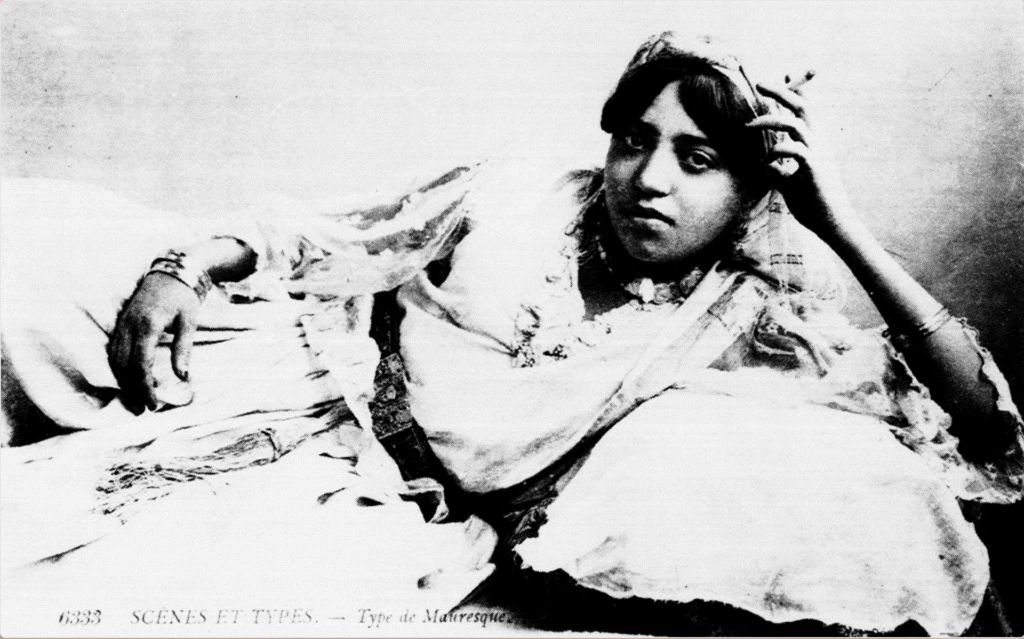
In some cases, French colonial photographers payed women (Algerian or otherwise) to pose for photographs, unveiled or in provocative states of undress in order to associate the haïk with immorality.
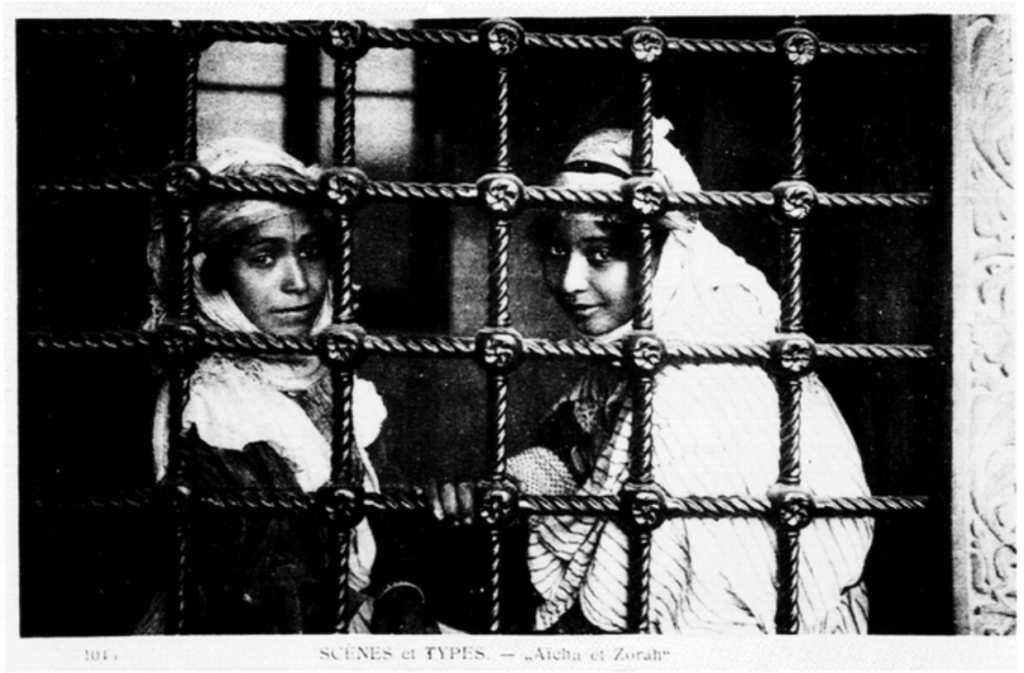
In others, Algerian women were photographed behind barred windows, or veiled en masse to evoke a sense of the mass oppression of Algerian women. This approach worked particularly well with French feminists.
These postcard images were circulated widely throughout French society, both in the colonies and in the mainland. While it’s unclear if the campaigns had any major effect on Algerian people, they had a major impact on views of Algerian culture and veiling in the West. It is, in part, what influences current-day French perceptions of the veil.
So…What Can This Postcard Tell Us?
How would this have been interpreted in French society? How does it fit into the French colonial narrative? What kind of implications does this image have?
